Ear feels blocked and will not pop
Send a short description of the blockage to find out what might be causing it. There is no fee for asking, and you are under no obligation to book anything.
Why the ear stops popping
Swallowing or yawning usually opens the eustachian tube, letting air equalise behind the eardrum. When that tube stays shut, pressure builds and the ear feels full. A cold, allergies or a sudden change in altitude can all cause this temporary seal.
Sometimes the problem sits further out. Wax produced by glands in the ear canal can harden into a plug that mimics the feeling of pressure. Water trapped after swimming does something similar. Because the sensation is much the same, guessing the cause at home rarely works.
A blocked feeling that lasts more than a day or two deserves attention. The specialist will look inside before deciding whether the issue is wax, fluid or something else entirely.
Cotton buds and candles make things worse
Pushing a cotton bud into the ear canal seems like the obvious fix. In practice it drives wax deeper against the eardrum, where it compacts into a harder mass. The canal lining is thin, and scratching it invites infection.
Ear candles carry their own risks. The heat can burn the outer ear, and melted wax from the candle itself sometimes drips into the canal. No reliable evidence shows they remove anything. Specialists advise against them because the harm they cause is well documented.
Fingers, hairpins and twisted tissues belong in the same category. Anything narrow enough to fit inside the ear is narrow enough to push debris further in. Leaving the canal alone is safer than trying to clear it blindly.
Softening drops as a first step
Pharmacies sell olive oil, sodium bicarbonate and saline drops meant to loosen dry wax. A few drops twice a day for three to five days can soften a plug enough for it to shift on its own.
Drops work best when the wax is dry and crumbly. If the blockage is caused by fluid behind the eardrum rather than wax in the canal, softeners will not help. That distinction matters, and it requires someone trained to look inside the ear to tell the two apart.
If drops bring no relief after a few days, or if pain develops, stop using them. Continuing to apply liquid to an ear that may have another problem only delays finding out what is actually wrong.
How a specialist examines the ear
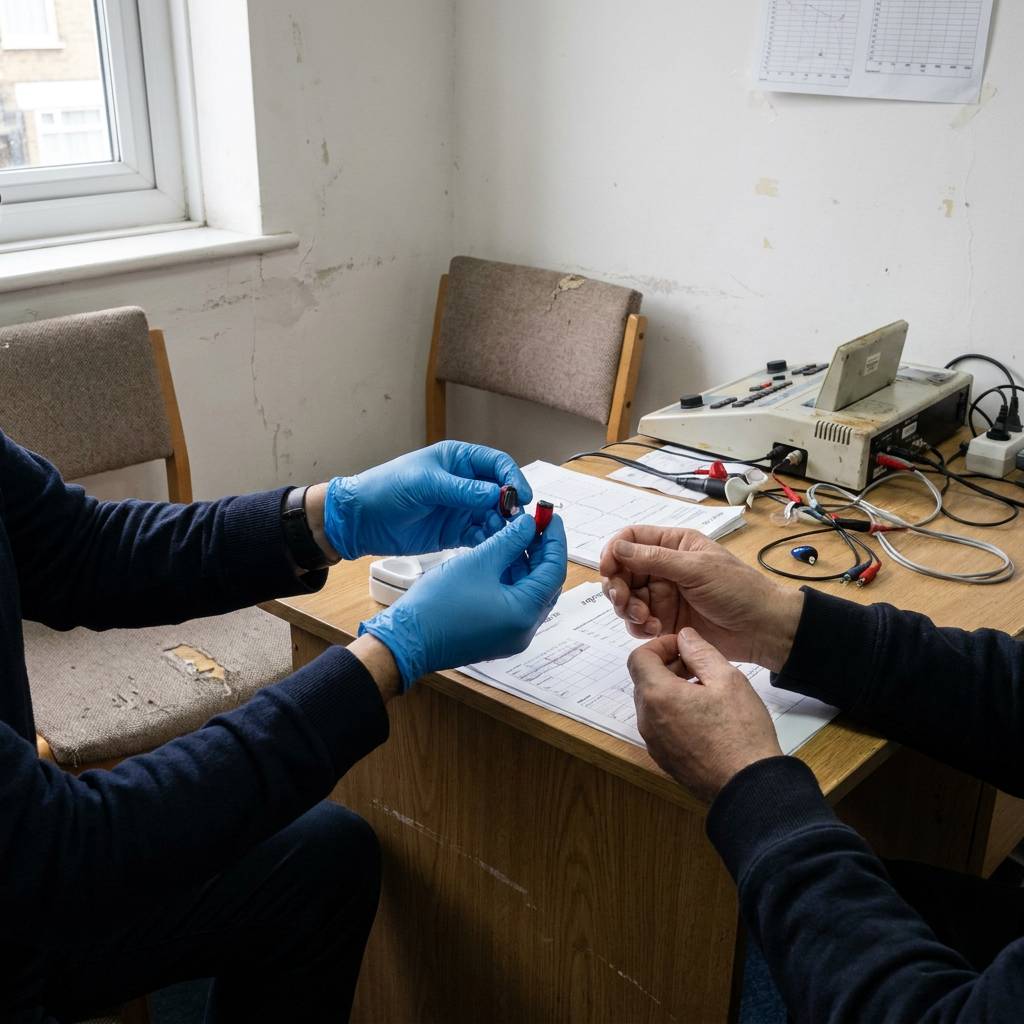
An audiologist uses an otoscope, a small light with a magnifying lens, to see down the canal. This takes seconds and shows whether wax is present, how far back it sits, and whether the eardrum looks healthy.
The examination also rules out other causes of fullness. Fluid behind the eardrum, inflammation of the canal skin, or a foreign object each require different handling. The specialist records what they see before recommending any removal method.
Looking first prevents unnecessary treatment. Someone who assumes they have wax might actually have a middle ear problem that needs a different approach entirely. The visual check is the point where guesswork ends.
Microsuction and other removal methods
When wax is confirmed, microsuction is often the preferred method. A small vacuum probe draws the softened material out under direct vision. The specialist watches through a microscope while working, so the eardrum stays visible throughout.
Irrigation is another option. Warm water is flushed gently into the canal to dislodge the plug. It suits certain types of wax but is avoided if the eardrum has a perforation or if there is active infection.
The choice between methods depends on what the examination showed. Hard, impacted wax close to the eardrum usually calls for microsuction. Softer deposits further out might clear with irrigation. The specialist decides based on the shape of the canal and the condition of the wax.
My ear feels full and nothing shifts it
A blocked sensation means air cannot move freely through the ear canal or the passage behind the eardrum. Wax, fluid or swelling can all produce the same heavy, muffled feeling.
- 1
Muffled hearing
Voices and background noise sound distant or wrapped in cotton. This happens when something physically obstructs sound reaching the eardrum.
- 2
Pressure that will not release
Swallowing, yawning or holding your nose fails to pop the ear. Persistent pressure suggests the blockage is solid rather than just air.

- 3
Mild ache or itch
A dull throb or tickle deep in the canal often accompanies compacted wax pressing against sensitive skin.
- 4
Ringing or buzzing
Tinnitus can start or worsen when wax traps sound vibrations inside the canal instead of letting them pass through.

Questions about a blocked ear
Answers to the things people most often ask when an ear will not clear itself.
- Will it clear on its own?
- Sometimes. If the cause is mild congestion from a cold, it may resolve in a few days. Compacted wax rarely shifts without help.
- Are drops safe to try?
- Over-the-counter softening drops are generally safe for intact eardrums. Stop using them if pain increases or discharge appears.
- Does removal hurt?
- Microsuction can feel strange and produces a loud rushing noise, but most people describe it as uncomfortable rather than painful.
- How long does it take?
- A typical microsuction appointment lasts fifteen to thirty minutes, including the initial examination of the ear canal.
- Can children get it done?
- Yes, though younger children may need extra preparation to sit still while the specialist works near the eardrum.
Tell us about the blockage
Describe what you feel and how long it has lasted. Your message goes to a local specialist who will suggest whether an appointment makes sense. Nothing is booked until you decide.
- No obligation
- Local to Mitcham
- Free to ask