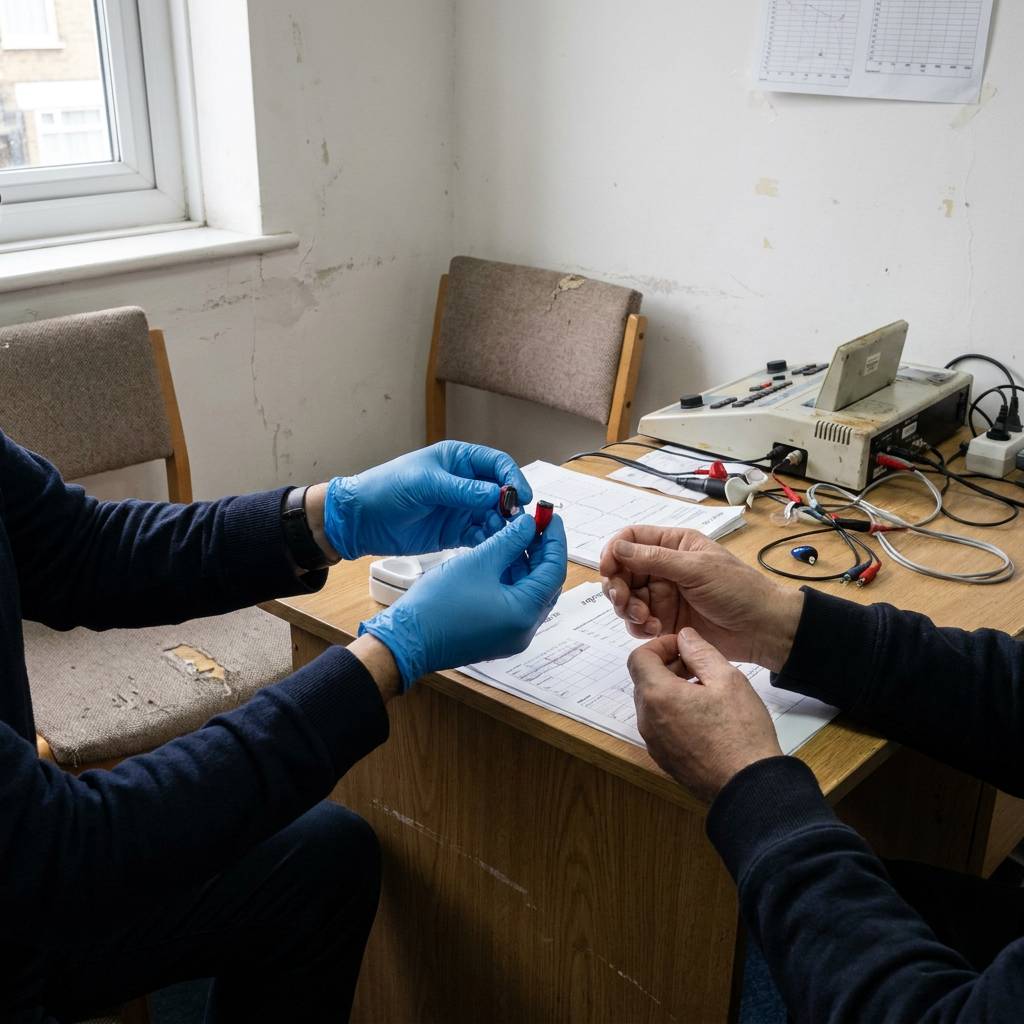
Hearing checks
Hearing checks for noisy work and hobbies
If you spend time around loud noise, ask for a hearing check. Sending an enquiry is free and does not commit you to an appointment. Find out what the audiologist measures and why it matters.
Why regular noise exposure changes your hearing
Loud sound damages the tiny hair cells inside the inner ear. Once those cells stop working they do not grow back. The damage builds slowly, so someone who works on building sites or plays in a band might not notice anything wrong for years.
Power tools, amplified music and engines all produce enough noise to cause harm if exposure is frequent. Earplugs help, but they rarely block everything. So the only way to know what is actually happening inside the ear is to measure it directly.
A hearing test records how well each ear responds to different pitches. An audiologist compares those readings against standard thresholds. If certain frequencies are already harder to hear, that information shapes what happens next. Without the measurement there is no way to tell whether the problem is wax, fluid or permanent damage.
Early signs that are easy to dismiss
Most people expect hearing loss to feel like someone turned down the volume. In reality the first signs are usually more specific. Speech starts to sound muffled while background noise stays sharp. You might find yourself watching mouths move to fill in missing words.
Ringing or buzzing after a shift or a gig is another signal. Tinnitus often appears before any obvious drop in hearing. It means the auditory system has been stressed, even if the ringing fades by the next morning.
Needing the television louder than everyone else in the room is a common early clue. So is asking people to repeat themselves in busy places like pubs or restaurants. These moments are easy to blame on tiredness or a bad connection. But when they happen repeatedly they point to a pattern worth checking. An audiologist can separate temporary irritation from lasting change.
What an audiologist measures at each visit
A hearing test is not a single pass or fail mark. The audiologist tests several frequencies across both ears, plotting the quietest sound you can detect at each pitch. That graph becomes a baseline.
They also check speech discrimination: how accurately you identify words played at a comfortable level. Someone with normal volume sensitivity can still struggle here if noise exposure has affected clarity rather than loudness.
Tympanometry may be used to see how the eardrum moves. This rules out middle ear problems such as fluid or pressure changes that mimic hearing loss. Wax build-up is checked too, since a blocked canal will distort every other result.
Each of these measurements gives the audiologist a fuller picture. One number alone does not explain what is happening. Together they show where the ear is working normally and where it needs attention.
Tracking changes from one appointment to the next
The real value of testing regularly is comparison. A single audiogram tells you where your hearing stands today. Two or three taken over a year or two reveal direction and speed.
If the high frequencies drop slightly between visits, the audiologist can discuss whether current protection is adequate. They might suggest different earplugs or shorter exposure times. Catching a shift early means adjustments can be made before the loss affects daily conversation.
Stable results are equally useful. Knowing that your hearing has held steady despite years of noisy work removes uncertainty. It confirms that whatever precautions you take are doing their job.
Specialist firms keep detailed records so each appointment builds on the last. You do not need to remember previous numbers yourself. The audiologist reads the history and explains what has changed and what has not.
When to book a check after noisy work or hobbies
Anyone exposed to loud environments for more than a few hours a week should consider periodic testing. That includes construction workers, musicians, motorcyclists and people who use power tools at home.
You do not need to wait until something feels wrong. Booking a test while your hearing seems fine establishes a starting point. Future appointments then have something solid to compare against.
If you already notice ringing, muffled speech or difficulty following conversations in noise, book sooner rather than later. Those symptoms mean the ear has already been under strain. Early assessment helps the audiologist determine whether the cause is temporary or permanent.
Specialist clinics in Mitcham offer private hearing tests without requiring a GP referral. You can arrange an appointment directly and receive the results on the day. The audiologist will explain what the findings mean and outline options if any action is needed.
Ask about a hearing check in Mitcham
Send your details and a specialist firm will respond to arrange a hearing test. There is no obligation to proceed once you know what the results show.
- No commitment required
- Results explained clearly
- Local Mitcham clinics